A Comprehensive Web3 Marketing Guide (Crypto, NFT, Blockchain)
Discover 8 proven Web3 marketing strategies for crypto and NFT projects. Learn Discord community growth, KOLs, airdrops, and SEO tactics to scale your brand. You will find answers to all your questions related to topic A Comprehensive Web3 Marketing Guide (Crypto, NFT, Blockchain) in the continuation of the text.
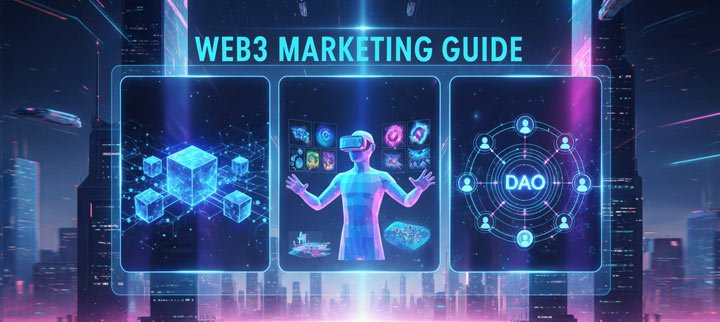
Web3 Marketing Guide: Growth Strategies for Blockchain, Crypto, and NFT Projects
The Paradigm Shift: Why Web2 Marketing Doesn't Work in Web3
8 Proven Growth Strategies for Web3 Projects
1. Community Building: Where It All Begins (Discord & Telegram)
2. Content Marketing: Build Your Vision and Credibility
3. KOL (Key Opinion Leader) Marketing
4. Hype and Expectation Management: Airdrops and Whitelists
5. Strategic Partnerships
6. SEO: Building a Bridge from the Web2 World to Web3
7. Smart Use of Traditional Channels
8. Graphic Design and Brand Identity
Conclusion: Web3 Marketing is a Marathon, Not a Sprint
Launchpads and IDOs: Where Do They Fit in a Web3 Launch?
Web3 marketing is the practice of growing blockchain, crypto, and NFT projects through community ownership and transparency instead of one-way advertising. Token holders act as stakeholders, so trust is earned with proof, not paid reach. The guide covers 8 proven strategies, from community building on Discord and Telegram to KOL partnerships, airdrops and whitelists, SEO, and brand identity. Each tactic aims to turn early supporters into long-term owners of the project.
Forget the rules of traditional marketing. In the world of Web3, you don't have "customers"; you have "community members," "supporters," and "stakeholders." The millions spent on billboards or TV ads are replaced by genuine connections forged in Discord channels and a trust built on transparency. Web3 is not just a technological revolution; it is also a cultural and marketing revolution.
Web3 Marketing Guide: Growth Strategies for Blockchain, Crypto, and NFT Projects
If you are launching a blockchain project, a new cryptocurrency, or an NFT collection, succeeding with the marketing playbooks of Web2 presents severe structural limits. The decentralized ecosystem operates under distinct dynamics, community expectations, and communication channels.
Drawing from Piar Medya's campaign insights across digital ecosystems, our agency team breaks down the core philosophy of Web3 marketing along with proven growth strategies to scale your project from launch to long-term adoption.
The Paradigm Shift: Why Web2 Marketing Doesn't Work in Web3
Before mapping out practical steps, understanding why traditional marketing models break down in decentralized spaces provides essential context.
- From Centralized Authority to Decentralized Community: Web2 marketing focuses on reaching masses through centralized ad platforms. In Web3, influence shifts directly to the community. Marketing is not a top-down broadcast, but an active dialogue shaped collaboratively with token holders.
- Data Control and Trust: Web2 captures and monetizes user data, whereas Web3 prioritizes user sovereignty and on-chain transparency. Every stage of your project (roadmap, smart contracts, tokenomics) requires public verification. Trust stems from transparent execution rather than paid claims.
- From Customer to Owner: In Web2, audiences are consumers of a product. In Web3, holding a token or NFT makes users direct stakeholders. Shared ownership forms the core driving force behind community-led advocacy.
8 Proven Growth Strategies for Web3 Projects
With foundational principles established, actionable tactics translate project vision into measurable traction.
1. Community Building: Where It All Begins (Discord & Telegram)
In Web3, your community functions as your core marketing driver. Discord and Telegram servers serve as primary hubs where early conversations start, loyal advocates assemble, and collective sentiment forms. For structured community growth:
- Create Value: Avoid turning community channels into speculative chat rooms. Deliver consistent utility through technical explainers, structured AMA (Ask Me Anything) sessions, contributor bounties, and transparent development updates.
- Maintain Active Leadership: Core founding teams must participate in community discussions, address feedback directly, and communicate development milestones openly.
- Structure Roles and Channels: Segment servers with clear roles and permission tiers tailored to developers, governance participants, liquidity providers, and new onboarding members.
2. Content Marketing: Build Your Vision and Credibility
Web3 participants allocate capital and attention to coherent visions backed by sound technical architecture. Strategic documentation bridges that narrative gap.
- Whitepaper / Litepaper: Whitepapers serve as the foundational blueprint of a blockchain initiative. A comprehensive document detailing technical architecture, token economics (tokenomics), security audits, and roadmaps establishes project credibility.
- Twitter (X) and Medium: High-frequency industry discourse occurs primarily on X through research threads and announcements. For long-form technical breakdowns and ecosystem recaps, dedicated Medium or Mirror publications provide clear archival value.
A strong project narrative relies on cohesive visual foundations and clear messaging through professional brand identity design.
3. KOL (Key Opinion Leader) Marketing
KOL marketing represents the Web3 adaptation of influencer marketing. Decentralized communities quickly reject paid promotion lacking technical merit. Working with respected Key Opinion Leaders who comprehend underlying technology and maintain legitimate technical credibility preserves brand reputation and builds lasting trust.
4. Hype and Expectation Management: Airdrops and Whitelists
- Airdrop: Airdrops distribute native tokens to wallet addresses fulfilling specific on-chain or community criteria. When structured properly against Sybil manipulation, airdrops decentralize governance distribution and reward genuine early adoption.
- Whitelist: Whitelisting grants early contributors guaranteed or discounted minting access for token generation and NFT launches, stabilizing initial liquidity while rewarding verified supporters.
5. Strategic Partnerships
Web3 expansion thrives on composability and interoperability. Establishing verifiable collaborations with aligned protocols, tooling providers, or DAOs strengthens project utility and introduces qualified audiences to your ecosystem.
6. SEO: Building a Bridge from the Web2 World to Web3
While social channels generate real-time engagement, prospective developers, institutional allocators, and end users continue to research protocols through organic search engines. Ensuring project documentation, gitbooks, and research articles rank for targeted informational queries via a structured SEO strategy captures search demand beyond native crypto bubbles.
7. Smart Use of Traditional Channels
Although ad platforms enforce specific compliance criteria for cryptocurrency offerings, compliant educational outreach remains viable. Running targeted Google Ads campaigns around non-financial documentation and distributing editorial PR through authoritative Web3 media outlets broadens brand reach across global markets.
8. Graphic Design and Brand Identity
A distinctive visual system, responsive dApp UI, and coherent NFT artwork provide early qualitative proof of engineering standards. In visually competitive marketplaces, partnering with a specialized graphic design agency ensures branding conveys technical sophistication across all consumer touchpoints.
Conclusion: Web3 Marketing is a Marathon, Not a Sprint
Scaling a Web3 initiative requires durable ecosystem alignment rather than short-lived speculative hype. Balancing proven digital marketing disciplines with deep immersion in decentralized culture creates sustainable community ownership over market cycles.
Launchpads and IDOs: Where Do They Fit in a Web3 Launch?
A crypto launchpad is a platform that helps early-stage projects raise funds and reach their first token holders. Vetted projects list an upcoming sale, and the launchpad's existing user base gains access to it, usually by staking the platform's own token. An IDO (Initial DEX Offering) is the sale model most launchpads use: tokens go on sale through a decentralized exchange, and liquidity becomes available for trading right after the event.
From a marketing perspective, a launchpad serves two purposes. It brings a ready audience of active crypto users to a project that has no community yet, and the platform's vetting process acts as a trust signal for cautious investors. Combining a launchpad campaign with the whitelist and airdrop tactics covered above concentrates attention around a single launch date, which is where early momentum is won or lost.
Piar Medya helps Web3 protocols and decentralized ventures craft verifiable go-to-market strategies, connect with engaged communities, and achieve measurable growth across global markets. Contact our team to develop your tailored Web3 marketing roadmap.